


- The body makes at least 28 collagen types, but Types I, II and III do most of the structural work.
- Type I is dominant in skin, bone and tendons. Type II sits almost only in cartilage. Type III provides elasticity and works alongside Type I in skin and blood vessels.
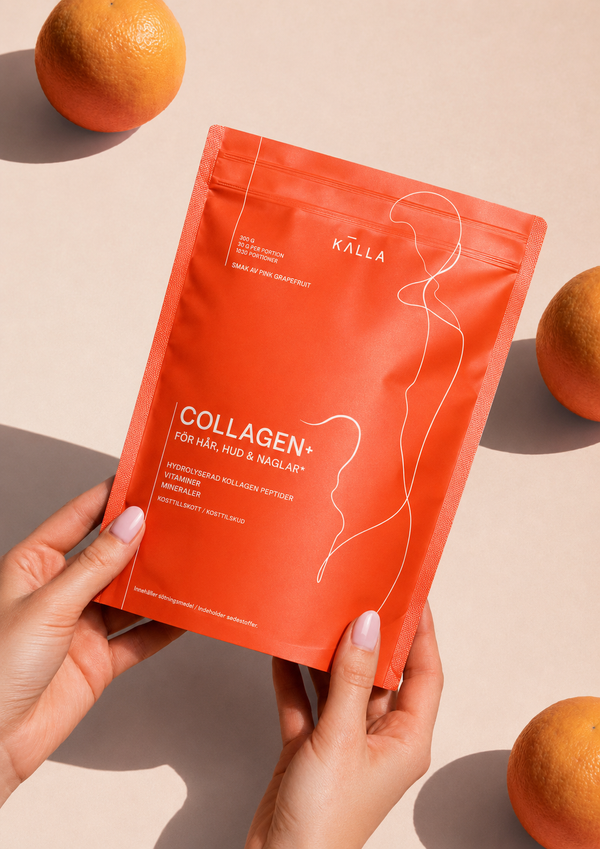
- For skin, hair and nail support, look for hydrolysed Type I and III peptides, the profile used in Collagen+.
Not all collagen is the same. The body makes at least 28 different types1, but three of them, Types I, II and III, do most of the structural work. If you're choosing a collagen supplement, the type matters more than the milligrams on the front of the pouch.
Here's the short version, written so you can read it over coffee.
Quick answer
- Type I is the structural collagen of skin, bone, tendons and hair. It is by far the most abundant in the body.
- Type II sits almost exclusively in cartilage and joints. It's a specialist, not an all-rounder.
- Type III works alongside Type I in skin, blood vessels and organs, giving tissues their elasticity and bounce.
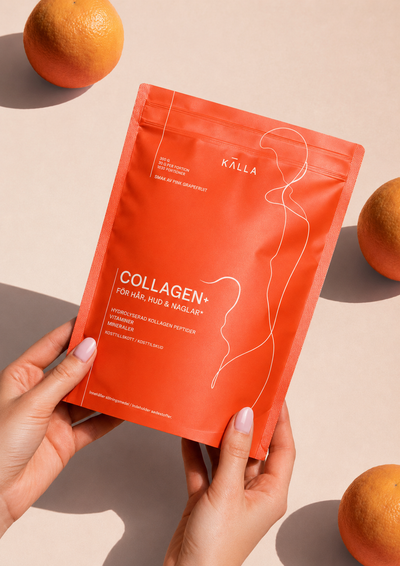
- For skin, hair and nails, the most relevant blend is hydrolysed Type I and Type III. This is the profile in our Collagen+ formula.
What is collagen, briefly
Collagen is the most abundant protein in the human body, making up roughly 25–35% of total protein content1. Think of it as the scaffolding that holds skin, bones, tendons, cartilage and blood vessels in place.
From around age 25, our own collagen production declines by approximately 1–1.5% per year2. That gradual loss is one of the biological reasons skin loses firmness and hair feels thinner over time.
What does Type I collagen do?
Type I is the workhorse. It makes up about 90% of all the collagen in the body1 and forms the dense, rope-like fibres that give skin, bone, tendons and ligaments their tensile strength.
When researchers talk about collagen for skin firmness, dermal density or bone health, they're almost always talking about Type I3. It's also the dominant type in most clinically studied collagen peptide formulas.
What does Type II collagen do?
Type II is the specialist. It makes up around 90–95% of the collagen in cartilage1 and almost nothing else. You'll find it in your knees, hips, intervertebral discs and the gel of the eye.
Type II is structurally and functionally different from Type I. It's a single-chain (homotrimeric) structure designed to hold water and absorb compression, which is why cartilage can act as a shock absorber. Type II supplements are typically sourced from chicken sternum and are used in joint contexts, not in beauty or skin formulations.
What does Type III collagen do?
Type III is the elastic partner to Type I. It forms thin, branching, mesh-like networks called reticular fibres, and it sits alongside Type I in skin, arterial walls, the gut and the uterus.
Where Type I provides strength, Type III provides flexibility, recoil and bounce. In young skin, Type III can make up close to half of the collagen network1. As we age, Type III is often the first to decline, which is partly why mature skin feels less elastic and recovers more slowly.
How do the three types compare?
| Type | Where it lives | What it does | Best paired with |
|---|---|---|---|
| Type I | Skin, bone, tendons, hair, teeth | Provides structure and tensile strength | Skin, hair and nail support |
| Type II | Cartilage, joints, intervertebral discs | Holds water, absorbs compression | Joint-specific products |
| Type III | Skin, blood vessels, organs | Provides elasticity and flexibility | Skin firmness and resilience |
Which type should you take?
The honest answer is: it depends on what you want to support.
For skin, hair, nail and connective tissue support, you want hydrolysed Type I and Type III peptides. This is the most studied combination in dermatology research3 and the foundation of Collagen+, which pairs hydrolysed bovine collagen peptides with hyaluronic acid, vitamin C, biotin, zinc and selenium for a full beauty-from-within profile.
For joint comfort, the relevant ingredient is Type II collagen, usually in a low, undenatured form4.
The two are different tools for different jobs. A collagen formula designed for skin will not necessarily benefit joints, and vice versa.
Why hydrolysed peptides matter
Native collagen is a huge molecule, around 285,000–300,000 daltons5. Your gut cannot absorb anything that large. The reason oral collagen supplements work at all is that the protein is broken down into low-molecular-weight peptides of around 3,000–6,000 daltons through controlled enzymatic hydrolysis5.
Once absorbed, specific peptide fragments such as prolyl-hydroxyproline (Pro-Hyp) circulate in the blood and signal to skin cells, encouraging the body's own collagen synthesis5. This is why bioavailability is one of the most important things to look at in a collagen supplement, and why we formulated Collagen+ with hydrolysed peptides and vitamin C, which contributes to normal collagen formation6.
Who this is and isn't for
Collagen peptides are a useful tool for supporting skin, hair and nail health, particularly from your mid-twenties onwards when natural production starts to decline. They work best as part of a balanced diet, not as a replacement for one.
Collagen is not vegan. Both bovine and marine collagen are derived from animal sources. If you avoid animal products, you'll want to look at the precursors instead. Vitamin C, zinc, copper and amino acid-rich foods all support your body's own collagen synthesis.
And no supplement is a quick fix. Most clinical studies show meaningful skin changes after 8–12 weeks of daily use7, which lines up with what our own customers tell us. The point is consistency, not intensity.
Scientific Sources
- Ricard-Blum, S. The Collagen Family. Cold Spring Harbor Perspectives in Biology, 2011.
- Choi, F. D. et al. Oral Collagen Supplementation: A Systematic Review of Dermatological Applications. Journal of Drugs in Dermatology, 2019.
- König, D. et al. Specific Collagen Peptides Improve Bone Mineral Density and Bone Markers in Postmenopausal Women: A Randomized Controlled Study. Nutrients, 2018. PMC5793325.
- Lugo, J. P. et al. Efficacy and Tolerability of an Undenatured Type II Collagen Supplement in Modulating Knee Osteoarthritis Symptoms. Nutrition Journal, 2016.
- León-López, A. et al. Hydrolyzed Collagen: Sources and Applications. Molecules, 2019. PMC6891674.
- EFSA. Scientific Opinion on the Substantiation of Health Claims Related to Vitamin C and Normal Collagen Formation. EFSA Journal, 2009.
- Bolke, L. et al. A Collagen Supplement Improves Skin Hydration, Elasticity, Roughness, and Density: A Randomized, Placebo-Controlled, Blind Study. Nutrients, 2019. PMC6835901.