


- Electrolytes are charged minerals your nerves, muscles and fluid balance depend on, and good hydration means keeping them in balance with water, not just drinking more.
- When you sweat you lose water and sodium together, so replacing only water can leave you more depleted, not less.
- There is no fixed number of glasses. Your needs change with heat, activity and body size, and much of your fluid comes from food.
- Sugary, highly concentrated sports drinks can slow hydration. For everyday sweat, a sugar-free mix led by sodium is usually enough.
We have all heard about the importance of hydration. But not many of us are very good at it, and even fewer understand how it actually works.
Water is the critical component of hydration. But there is a small group of minerals called electrolytes that play a critical role in the management of fluid inside the body. The balance between fluid and electrolytes helps keep energy steady, your muscles working, and your head clear. Here is what the science says, with the myths left at the door.
What are electrolytes, and why does your body need them?
Roughly 60 percent of your body is water, split between the inside of your cells and the space around them.1 Electrolytes are the minerals dissolved in that water, and they carry a small electrical charge. That charge is the point. It is how a nerve fires, how a muscle contracts, and how your body decides where water should sit.
The main players are sodium, potassium, calcium, magnesium and chloride.2 Sodium and chloride mostly live in the fluid around your cells, potassium and magnesium mostly inside them, and the gradient between the two sides drives almost everything, from a heartbeat to a single thought.1
When that balance drifts, you feel it before you can name it. Low energy, foggy thinking, a heart rate that runs higher than it should. Hydration is not really about water. It is about keeping water and minerals in the right proportion.
Why isn't water alone enough?
Here is the part most people miss. Sweat is not just water. It is water plus sodium, with smaller amounts of potassium, magnesium and calcium carried out alongside it.3
Sweat is what scientists call hypotonic, meaning it is more dilute than your blood. You lose proportionally more water than salt.4 So if you sweat hard and then drink only plain water, you dilute the sodium that is left. In the extreme, endurance athletes who drink large volumes of water without replacing salt can develop low blood sodium called hyponatremia, a genuinely dangerous condition.4
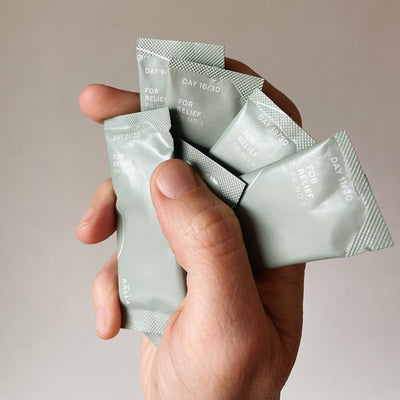
This is the simple idea behind ELECTROLYTE+. It is made for the moments when water is not enough on its own, after a long sweat, a hot day, or a session in the sauna, when you want to put back what you lost rather than just dilute what remains.
How much water do you actually need?
Less rigidly than the old rule suggests. The “eight glasses a day” mandate is not grounded in physiology. Real needs depend on your lean body mass, the climate, how much you move, and how much water you already get from food.5
A useful reference point is around 2.7 litres of total fluid a day for women and 3.7 litres for men, but that figure includes everything, your meals, your coffee, your tea, not just glasses of water.5 On a hot day or a hard training day, that demand climbs steeply.
A few stubborn myths are worth retiring while we are here:
- Clear urine is not the goal. Perfectly clear urine can simply mean you are drinking more than you need, and it tells you nothing about your electrolyte balance.6
- Coffee does not dehydrate you. Caffeinated drinks still deliver roughly 70 to 80 percent of the hydration of plain water, so your morning coffee counts toward your day.7
- You can over-hydrate. More water is not automatically better. Past a point, it dilutes you.4
Is sodium the enemy or the point?
Sodium has spent years cast as the villain. In the context of hydration, it is closer to the hero. Sodium is the single most important electrolyte for holding water in the right place, and it makes up the large majority of the dissolved particles in the fluid around your cells.4 It is also the one you lose most of when you sweat.2
That is why a serious hydration formula leads with sodium rather than hiding it. ELECTROLYTE+ uses Guérande sea salt, a hand-harvested French sea salt, as its sodium source. The quantity matters more than the romance, but the provenance is a nice signal that this is considered, not generic.
A note on balance, since honesty is the whole point of a guide like this. That meaningful sodium content is exactly why ELECTROLYTE+ is not the right choice for everyone. If you are on a sodium-restricted diet for blood pressure, heart or kidney reasons, this is a conversation to have with your doctor first.
Do electrolytes prevent muscle cramps?
This is the claim you see everywhere, and the science behind it is shakier than the marketing suggests. For a century, cramps during exercise were blamed on dehydration and salt loss. Modern research has largely dismantled that story.8
The problem is simple. Dehydration is a whole-body state, so it cannot explain why a cramp strikes one specific calf while every other muscle stays calm. Studies repeatedly find no reliable difference in hydration or blood electrolytes between athletes who cramp and those who do not.8 Cramps even happen in the cold, where heavy sweating is not a factor.8
The leading explanation now is altered neuromuscular control, a fatigue-driven misfire in the nerves controlling the muscle. It is why stretching, which calms that nerve signal, relieves a cramp almost instantly, while topping up salt does not.8 A large review of athletes found electrolyte supplements did not prevent the problems they are so often sold to fix.9
So no, electrolytes are not a cramp cure. They earn their place for fluid balance, energy and recovery, which is a more honest and more useful reason to reach for them.
What actually makes a hydration drink work?
The secret is concentration, not colour. A drink that is more concentrated than your blood, what scientists call hypertonic, can actually pull water into your gut and slow hydration down. Many sugary, neon sports drinks fall into exactly this trap, which is why sipping them all day can leave you more parched.10
The sweet spot is a drink that is equal to or slightly more dilute than your blood, so water moves into the body quickly.11 A little glucose does help your gut absorb sodium and water faster, through a clever transporter that carries sodium and glucose across the gut wall together.12 But that advantage mainly counts during prolonged endurance efforts beyond about two hours.13 For everyday sweat, a normal workout, a sauna, a warm afternoon, you simply do not need the sugar, and you are better off without it.
Interestingly, plain water is not always the most hydrating option either. Drinks with a little electrolyte and substance to them, milk being the classic example, are retained by the body better than water alone, because they leave the stomach more slowly and hold onto fluid for longer.14 The lesson is the same one your body keeps repeating: water plus the right minerals beats water on its own.
This is the logic ELECTROLYTE+ is built on. It is sugar-free, sweetened only with stevia, and led by sodium, the profile that suits real-life sweat rather than a two-hour race.
The four electrolytes that matter
Most budget mixes carry two electrolytes. A fuller formula carries four. Here is what each one contributes, in the careful language the science actually supports.15
| Electrolyte | What it does |
|---|---|
| Sodium (from Guérande sea salt) | The primary electrolyte lost in sweat, and the main driver of fluid balance. |
| Potassium | Contributes to normal muscle function and normal functioning of the nervous system. |
| Calcium | Contributes to normal muscle function. The fourth electrolyte most rivals leave out. |
| Magnesium | Contributes to normal muscle function and to a reduction of tiredness and fatigue. |
ELECTROLYTE+ carries all four, with magnesium from two sources for a fuller dose, plus taurine, one of the most researched amino acids in sports nutrition, and a quiet measure of prebiotic fibre. It is a more considered formula than a simple salt-and-sugar sachet, which is rather the point.
When should you reach for electrolytes?
Think of electrolytes as a tool for specific moments rather than an everyday habit for everyone. The clearest occasions are after a workout, after the sauna, on a hot day, during travel, and yes, the morning after a late night, when you are simply rehydrating.
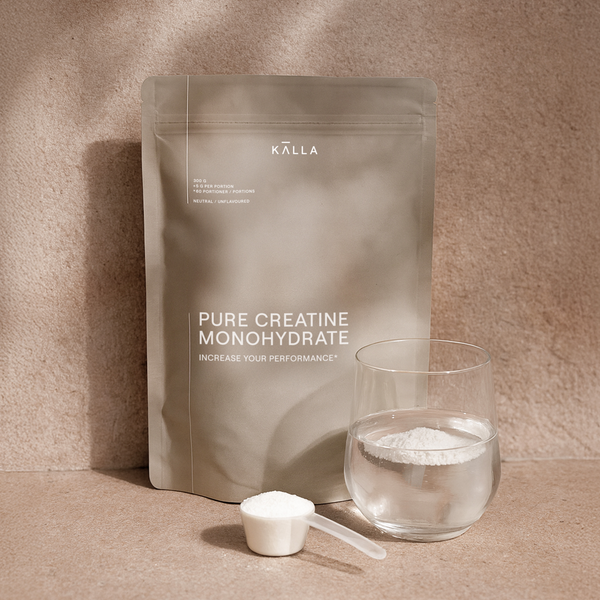
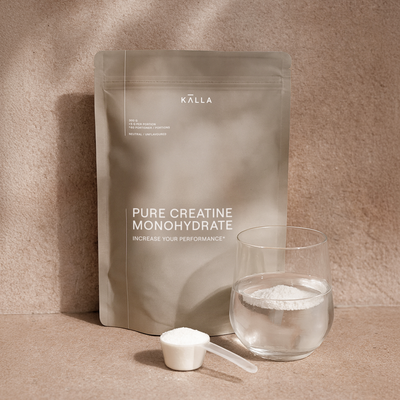
You can stir a scoop into water at any time of day. Many people pair it with Pure Creatine around training, and use Magnesium as a separate evening dose, since the small amount in a hydration mix sits comfortably alongside it.
And the honest caveat, because a good guide includes one: electrolytes support a balanced lifestyle, they do not replace it. They are intended for adults. If you are pregnant, breastfeeding, on a sodium-restricted diet, or under medical care, check with your healthcare professional first.
Hydration, in the end, is not complicated. Drink to your day, not to a rule. Replace what you sweat out, minerals included. And when water alone is not enough, reach for something that puts back what you actually lost.
“Good hydration habits are fundamental to health. Yet people often get hydration very wrong. Active individuals are likely to need a sodium supplement to complement their water intake.”
Matt Jones, Sports Nutritionist
Scientific Sources
- Physiology, Water Balance. StatPearls, NCBI Bookshelf. Accessed June 15, 2026. https://www.ncbi.nlm.nih.gov/books/NBK541059/
- Electrolytes. StatPearls, NCBI Bookshelf. Accessed June 15, 2026. https://www.ncbi.nlm.nih.gov/books/NBK541123/
- Importance of Electrolytes in Exercise Performance and Assessment Methodology After Heat Training: A Narrative Review. MDPI. Accessed June 15, 2026. https://www.mdpi.com/2076-3417/14/22/10103
- Peter Attia, MD. Ask Me Anything #33: All Things Hydration. The Drive (podcast). Accessed June 15, 2026. https://peterattiamd.com/
- Water: How much should you drink every day? Mayo Clinic. Accessed June 15, 2026. https://www.mayoclinic.org/healthy-lifestyle/nutrition-and-healthy-eating/in-depth/water/art-20044256
- Hydration Myths vs. Facts: Are You Drinking Enough Water? Sky Lakes Medical Center. Accessed June 15, 2026. https://www.skylakes.org/live-smart/posts/hydration-myths-vs-facts-are-you-drinking-enough-water/
- A randomized trial to assess the potential of different beverages to affect hydration status. PubMed. Accessed June 15, 2026. https://pubmed.ncbi.nlm.nih.gov/26702122/
- Exercise-Associated Muscle Cramp, Doubts About the Cause. PMC. Accessed June 15, 2026. https://pmc.ncbi.nlm.nih.gov/articles/PMC5857054/
- Electrolyte supplements don't prevent illness in athletes. Stanford Medicine. Accessed June 15, 2026. https://med.stanford.edu/news/all-news/2020/02/electrolyte-supplements-dont-prevent-illness-in-athletes.html
- The Hydrating Effects of Hypertonic, Isotonic and Hypotonic Sports Drinks and Waters on Central Hydration During Continuous Exercise. PMC. Accessed June 15, 2026. https://pmc.ncbi.nlm.nih.gov/articles/PMC8803723/
- American College of Sports Medicine Position Stand: Exercise and Fluid Replacement. PubMed. Accessed June 15, 2026. https://pubmed.ncbi.nlm.nih.gov/17277604/
- Isotonic transport by the Na+-glucose cotransporter SGLT1 from humans and rabbit. PMC. Accessed June 15, 2026. https://pmc.ncbi.nlm.nih.gov/articles/PMC2278509/
- Rehydration during Endurance Exercise: Challenges, Research and Recommendations. PMC. Accessed June 15, 2026. https://pmc.ncbi.nlm.nih.gov/articles/PMC8001428/
- The Beverage Hydration Index: Influence of Electrolytes, Carbohydrate and Protein. PMC, NIH. Accessed June 15, 2026. https://pmc.ncbi.nlm.nih.gov/articles/PMC8465972/
- Compositional Aspects of Beverages Designed to Promote Hydration Before, During, and After Exercise: Concepts Revisited. PMC. Accessed June 15, 2026. https://pmc.ncbi.nlm.nih.gov/articles/PMC10781183/