


- Women's nutritional needs shift with every hormonal life stage.
- Aim for 30-40 g protein per meal from high-leucine sources.
- Carbohydrate tolerance peaks in the follicular phase and drops after ovulation.
- Prioritise omega-3s and unsaturated fats as oestrogen declines.
- Fibre regulates oestrogen levels through the gut's estrobolome.
How protein, carbohydrates, fats, and fibre work differently in your body, and why your needs shift with every hormonal chapter. Most of what we know about nutrition was built on research conducted almost exclusively on men.
The assumption was simple: women are smaller, so they need less. But that assumption was wrong. Women are not small men. Your hormones shift across your menstrual cycle, fluctuate during perimenopause, and permanently decline after menopause.
Each of these transitions changes how your body absorbs, stores, and uses the food you eat. This article breaks down the four main nutrition groups through a female lens, not to overwhelm, but to give you knowledge you can act on.
1. Protein: The Building Block Your Body Fights to Keep
Protein maintains muscle, supports bone density, produces hormones, and fuels your immune system. What most guidelines miss is that women need more protein than traditionally recommended, and the amount changes depending on where you are in life.
How does protein metabolism change during your menstrual cycle?
After ovulation, progesterone rises and increases the breakdown of amino acids during physical activity.¹ Your body uses up protein faster. If you are active, aim for the upper end of the recommended range, 1.6 to 2.0 g/kg body weight per day, during the luteal phase, and distribute it evenly across meals.²
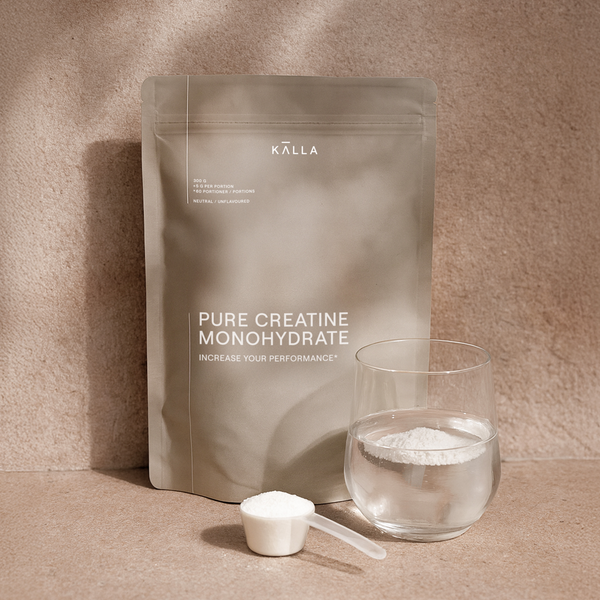
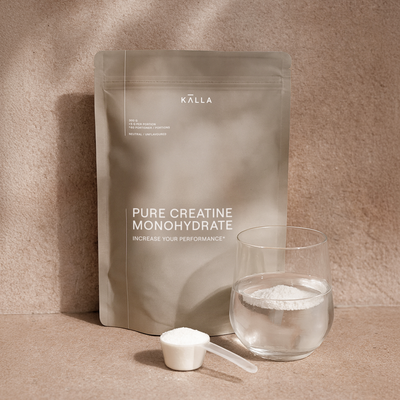
Creatine supplementation (3 to 5 g daily) is also well supported by research to help offset the performance dip many women experience in the high-hormone phase of their cycle.
What happens to protein needs during and after menopause?
As oestrogen declines, skeletal muscle loses sensitivity to dietary amino acids, a phenomenon called "anabolic resistance."³ The standard daily allowance of 0.8 g/kg prevents deficiency but does not protect against muscle loss. Leading researchers now suggest women over 50 aim for 1.5 to 2.0 g/kg per day.⁴⁵
Each meal should contain at least 30 to 40 grams of high-quality protein. The reason comes down to leucine, the amino acid that triggers muscle protein synthesis. In younger women, about 2 grams of leucine is enough. In postmenopausal women, the threshold rises to 3 to 4 grams.³ A landmark study found that 15 grams of whey stimulated muscle building in younger women but produced no measurable response in postmenopausal women.⁶
Eating 10 to 15 grams of protein spread over many small snacks is metabolically insufficient for muscle growth in ageing women, because the leucine threshold is never reached.
Animal proteins (eggs, fish, dairy) are naturally rich in leucine and highly bioavailable. Plant proteins can work, but typically require higher volume, and more total calories, to reach the same trigger. For women managing weight and insulin sensitivity around menopause, that caloric efficiency matters.
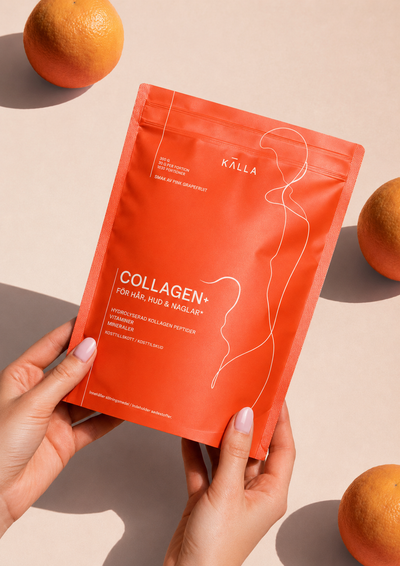
From KÄLLA: PERFORM delivers 22 g of fast-absorbing clear whey protein per serving, with added digestive enzymes and spore-forming probiotics for comfortable absorption. It is light enough to drink in the morning, making it a simple way to reach your protein target at the start of the day rather than trying to catch up at dinner. For dedicated creatine support, Pure Creatine Monohydrate provides a full 5 g research-backed dose in a single unflavoured scoop.
| Protein: Key Takeaways | |
|---|---|
| Daily target | 1.4 to 2.0 g/kg, higher in the luteal phase and after menopause |
| Per meal | At least 30 g (40 g if over 50) to trigger muscle synthesis |
| Timing | Distribute evenly across three to four meals |
| Best sources | High-leucine: eggs, fish, dairy, whey |
2. Carbohydrates: Your Fuel Source That Follows Your Hormones
Carbohydrates are your body's preferred energy source, but your ability to use them is not constant. It shifts with your hormones.
Why does the follicular phase favour carbohydrates?
In the first half of your cycle, oestrogen rises and insulin sensitivity peaks. Your body efficiently stores glucose as muscle glycogen.⁷ This is when carb-loading strategies actually work in women, producing the 18 to 47% glycogen boost typically seen in male athletes.⁸
What changes in the luteal phase?
After ovulation, progesterone creates temporary insulin resistance.⁷ Muscles become less responsive to insulin, and glucose is redirected toward the liver and uterine lining.⁸ The same carb-loading protocol that works in the follicular phase can produce little to no glycogen increase during the luteal phase.
The practical adjustment: match carbohydrate intake to activity level daily, and consume carbs within 30 to 40 minutes after exercise, when muscles can absorb glucose without relying on insulin.⁹
Luteal-phase carbohydrate cravings are physiological, not a failure of willpower. Your body is signalling a genuine shift in fuel metabolism.
How does menopause affect carbohydrate metabolism?
When oestrogen declines permanently, baseline insulin sensitivity drops with it.¹⁰ The liver produces more glucose on its own while converting excess energy into fat, favouring visceral fat storage. This does not mean eliminating carbs, but it does mean prioritising complex, fibre-rich sources and managing intake more carefully.¹¹
From KÄLLA: HORMONES & ME contains inositol, chromium, and cinnamon, three ingredients studied for their role in supporting healthy insulin sensitivity and blood sugar regulation. It is formulated with women navigating perimenopause and menopause in mind, when carbohydrate tolerance naturally declines.
| Carbohydrates: Key Takeaways | |
|---|---|
| Follicular phase | Insulin sensitivity peaks, the best window for higher carb intake |
| Luteal phase | Eat carbs around exercise and within 30-40 minutes post-workout |
| After menopause | Focus on complex, fibre-rich sources and moderate overall intake |
| Cravings | Luteal-phase cravings are physiological, not a failure of willpower |
3. Fats: The Protector You Lose at Menopause
Fat is structural material for cell membranes, the precursor for hormone production, and a critical building block for your brain. For women, the story of dietary fat is deeply tied to oestrogen.
What cardiovascular protection does oestrogen provide before menopause?
Before menopause, oestrogen supports healthy cholesterol profiles, regulates lipid trafficking, and helps prevent arterial plaque formation.¹² Women also burn a higher proportion of fat during exercise compared to men, roughly 51% versus 44%, making fat a primary fuel source, not just stored energy.¹
How does fat metabolism change after menopause?
When oestrogen declines, total cholesterol and LDL rise, and cardiovascular risk equalises with men.¹³ At the cellular level, fat-burning genes are downregulated while fat-storage genes ramp up.¹⁴ Reducing saturated fat and replacing it with unsaturated sources, olive oil, avocados, nuts, fatty fish, is one of the most consistently supported interventions for postmenopausal heart health.¹⁵
Why are omega-3 fatty acids important for brain health during menopause?
The "brain fog" many women describe during menopause, difficulty concentrating, memory lapses, is well documented.¹⁶ Brain tissue is heavily enriched in DHA, an omega-3 fatty acid. As inflammation increases with visceral fat accumulation, maintaining omega-3 intake through fatty fish or quality supplements supports long-term cognitive resilience.
From KÄLLA: Omega 3+ delivers over 2,000 mg of EPA and DHA per serving, the doses referenced in research supporting heart and brain health. Every batch is tested for heavy metals, dioxins, and oxidation, and packaged under nitrogen to preserve freshness.
| Fats: Key Takeaways | |
|---|---|
| Before menopause | Oestrogen enhances fat burning and cardiovascular protection |
| After menopause | Prioritise unsaturated fats (olive oil, nuts, fish) over saturated sources |
| Omega-3s | DHA supports brain health and helps manage rising inflammation |
| Core role | Fat is essential for hormones, cell membranes, and cognition at every age |
4. Fibre: The Unsung Hero of Hormonal Balance
Most people think of fibre as a digestive aid. For women, it plays a far more powerful role: it actively helps regulate oestrogen levels.
What is the estrobolome, and why does it matter?
Inside your gut lives a collection of bacteria called the estrobolome.¹⁷ These bacteria produce enzymes that determine how much oestrogen your body recirculates versus eliminates. When gut balance is disrupted or fibre intake is low, neutralised oestrogen gets reactivated and sent back into the bloodstream, a pattern linked to oestrogen dominance, heavier periods, PMS, and conditions like endometriosis.¹⁸ Fibre interrupts this cycle in two ways: it physically binds to oestrogen metabolites and carries them out, and it feeds the beneficial bacteria that keep the estrobolome balanced.
Increasing daily fibre intake by just 5 grams is associated with significantly lower circulating oestradiol and progesterone levels.¹⁸
Why does fibre become even more important after menopause?
As oestrogen declines, gut microbiome diversity drops and the bacterial composition starts to resemble the male gut.¹⁷¹⁹ Beneficial species decline, inflammatory markers rise, and blood sugar instability worsens. Standard guidelines suggest just 21 grams of fibre for women over 50, but functional nutrition experts consistently argue for 25 to 35 grams daily from diverse sources. Cruciferous vegetables (broccoli, Brussels sprouts, kale) deserve special attention: they are rich in DIM, a compound that supports oestrogen detoxification. Aim for 1.5 to 2.5 cups daily. If you experience IBS or bloating, increase fibre gradually, starting around 10 to 15 grams and building up slowly.
From KÄLLA: PREBIOTIC BLEND provides 5 g of prebiotic fibre per serving from wholefood sources, including oat beta-glucan, psyllium husk, chicory root inulin, and fruit and vegetable powders. That is over a fifth of your recommended daily fibre intake from a single scoop, with the diversity of sources that supports a varied microbiome. Pair it with any of KÄLLA's probiotic supplements for a complete synbiotic approach: the prebiotic feeds the probiotic, and together they support more than either alone.
| Fibre: Key Takeaways | |
|---|---|
| Hormonal role | Fibre helps eliminate excess oestrogen, reducing the risk of hormonal imbalance |
| Daily target | 25 to 35 grams, well above the standard 21-gram recommendation |
| Best sources | Cruciferous vegetables are particularly valuable for oestrogen detoxification |
| Sensitive gut | Increase gradually if you experience bloating or IBS |
Bringing It All Together
Your nutritional needs are not static. They shift with your cycle, evolve through perimenopause, and change again after menopause. The core principles are simpler than the science behind them.
- Protein protects your muscle and bone. Eat enough at every meal, especially after 40.
- Carbohydrates fuel your activity, but tolerance shifts across your cycle and through life.
- Fats support your hormones, brain, and heart, and quality matters more as oestrogen declines.
- Fibre is your hormonal housekeeper: it keeps oestrogen in check, feeds protective gut bacteria, and stabilises blood sugar. You do not need to overhaul everything at once. Start with the chapter of life you are in right now, and make one or two changes that feel manageable.
Who might this not be for?
This article provides general nutritional guidance for women across hormonal life stages. It is not a substitute for individualised medical advice, particularly if you are managing PCOS, endometriosis, thyroid conditions, eating disorders, or other conditions that affect nutrient metabolism. If you are pregnant or breastfeeding, your requirements differ significantly. Always consult a healthcare professional before making major dietary changes.
Scientific Sources
- Krejza, M. et al. (2025). An Overview of the Impact of the Menstrual Cycle on Nutrient Requirements. Nutrients, 18(7), 1063.
- Wooding, D.J. et al. Muscle Protein Metabolism and Protein Requirements for Female Athletes: Aligning Science with Sex-Specific Needs. Gatorade Sports Science Exchange.
- Murphy, C.H. et al. (2018). Is leucine content in dietary protein the key to muscle preservation in older women? American Journal of Clinical Nutrition, 108(5), 1145–1147. PMC 6248570.
- García-Esquinas, E. et al. (2023). Nutritional and lifestyle management of the aging journey: A narrative review. Frontiers in Nutrition, 10. PMC 9903079.
- Tang, J. et al. (2025). Dietary protein requirements of older adults with sarcopenia determined by the indicator amino acid oxidation technology. Frontiers in Nutrition, 12.
- Szwiega, S. et al. (2021). Dietary leucine requirement of older men and women is higher than current recommendations. American Journal of Clinical Nutrition. PMC 7851820.
- Tarnopolsky, M.A. (2008). Gender Differences in Carbohydrate Metabolism and Carbohydrate Loading. Canadian Journal of Applied Physiology. PMC 2129154.
- McLay, R.T. et al. (2007). Carbohydrate Loading and Female Endurance Athletes: Effect of Menstrual-Cycle Phase. International Journal of Sport Nutrition and Exercise Metabolism.
- Gaskins, A.J. et al. (2018). Changes in macronutrient, micronutrient, and food group intakes throughout the menstrual cycle in healthy, premenopausal women. European Journal of Nutrition, 58(8). PMC 6257992.
- Grzymisławska, M. et al. (2024). The Importance of Nutrition in Menopause and Perimenopause — A Review. Nutrients, 16(1), 27. PMC 10780928.
- Silva, T.R. et al. (2021). Nutrition in Menopausal Women: A Narrative Review. Nutrients, 13(7), 2149. PMC 8308420.
- Wang, X. et al. (2018). Sex differences in lipid and lipoprotein metabolism. Frontiers in Endocrinology. PMC 6066747.
- Chen, Q. et al. (2026). Preliminary lipidomics and transcriptomics reveals stage-specific dynamic metabolic patterns from menopause transition to postmenopause. Frontiers in Endocrinology, 17.
- Ko, S.H. & Kim, H.S. (2022). Energy Metabolism Changes and Dysregulated Lipid Metabolism in Postmenopausal Women. Nutrients, 14(1), 1217. PMC 8704126.
- Kelleher, M. et al. (2025). Nutrient Intake and Menopausal Symptoms in Perimenopausal Women. Nutrients, 17(24), 3887.
- O'Brien, J.S. et al. (2025). Omega-3 fatty acids, brain health and the menopause. Maturitas. PMC 12209554.
- Arora, S. et al. (2025). Diet, the Gut Microbiome, and Estrogen Physiology: A Review in Menopausal Health and Interventions. Nutrients, 18(7), 1052.
- Gaskins, A.J. et al. (2009). Effect of daily fiber intake on reproductive function: the BioCycle Study. American Journal of Clinical Nutrition. PMC 2744625.
- Peters, B.A. et al. (2022). Menopause Is Associated with an Altered Gut Microbiome and Estrobolome, with Implications for Adverse Cardiometabolic Risk. mBio, 13(4). PMC 9239235.